

 最后编辑:2021-04-26
- 资源介绍
- 更新记录
- 安装教程

WordPress REST API 内容注入
0x00 漏洞简述
1. 漏洞简介
在REST API自动包含在WordPress4.7以上的版本,WordPress REST API提供了一组易于使用的HTTP端点,可以使用户以简单的JSON格式访问网站的数据,包括用户,帖子,分类等。检索或更新数据与发送HTTP请求一样简单。上周,一个由REST API引起的影响WorePress4.7.0和4.7.1版本的漏洞被披露,该漏洞可以导致WordPress所有文章内容可以未经验证被查看,修改,删除,甚至创建新的文章,危害巨大。
2. 漏洞影响版本
- WordPress4.7.0
- WordPress4.7.1
0x01 漏洞复现
Seebug上已经给出详细的复现过程,在复现过程中可以使用已经放出的POC来进行测试。
0x02 漏洞分析
其实漏洞发现者已经给出了较为详细的分析过程,接下来说说自己在参考了上面的分析后的一点想法。
WP REST API
首先来说一下REST API。
控制器
WP-API中采用了控制器概念,为表示自愿端点的类提供了标准模式,所有资源端点都扩展WP_REST_Controller来保证其实现通用方法。
五种请求
之后,WP-API还有这么几种请求(也可以想成是功能吧):
- HEAD
- GET
- POST
- PUT
- DELETE
以上表示HTTP客户端可能对资源执行的操作类型。
HTTP客户端
WordPress本身在WP_HTTP类和相关函数中提供了一个HTTP客户端。用于从另一个访问一个WordPress站点。
资源
简单来说,就是文章,页面,评论等。
WP-API允许HTTP客户端对资源执行CRUD操作(创建,读取,更新,删除,这边只展示和漏洞相关的部分):
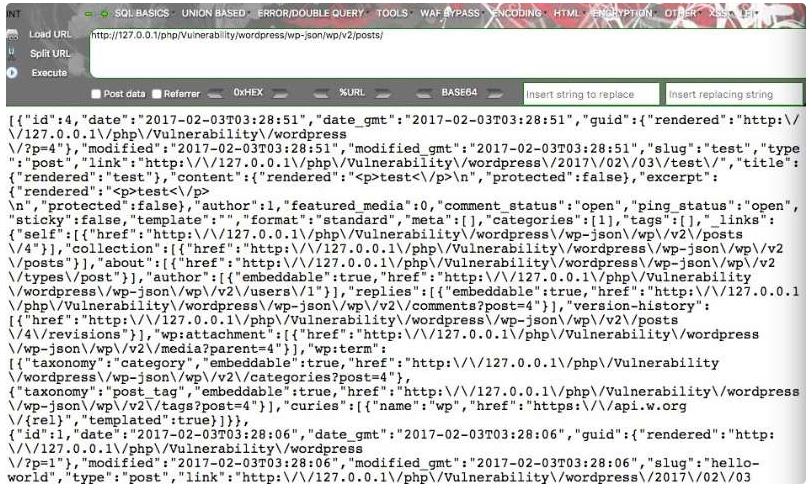
GET /wp-json/wp/v2/posts获取帖子的集合:
GET /wp-json/wp/v2/posts/1获取一个ID为1的单独的Post:
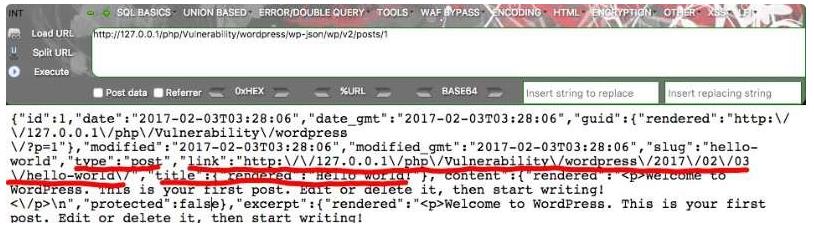
可以看到ID为1的文章标题为Hello World,包括文章的路由也有。
路由
路由是用于访问端点的“名称”,在URL中使用(在非法情况下可控,就像这个漏洞一样)。
例如,使用URLhttp://example.com/wp-json/wp/v2/posts/123:
- 路由(route)是
wp/v2/posts/123,不包括wp-json,因为wp-json是API本身的基本路径。 - 这个路由有三个端点:
- GET触发一个
get_item方法,将post数据返回给客户端。 - PUT触发一个
update_item方法,使数据更新,并返回更新的发布数据。 - DELETE触发
delete_item方法,将现在删除的发布数据返回给客户端。
- GET触发一个
静态追踪
知道了WP-API的路由信息以及其操作方式,可以根据其运行的思路来看一下具体实现的代码。
我们看一下/wp-includes/rest-api/endpoints/class-wp-rest-post-controller.php:
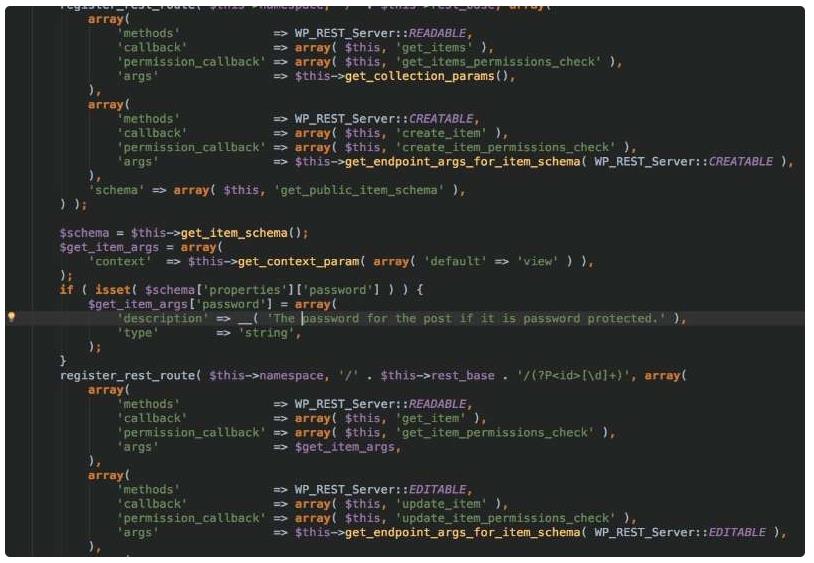
根据上面的信息,我们可以知道这是注册controller对象的路由,实现路由中端点方法。
在这里,如果我们向/wp-json/wp/v2/posts/1发送请求,则ID参数将被设置为1:

同时,注意一下这里:
register_rest_route( $this->namespace, \'/\' . $this->rest_base . \'/(?P[/d] )\', array(
			array(
				\'methods\'             => WP_REST_Server::READABLE,
				\'callback\'            => array( $this, \'get_item\' ),
				\'permission_callback\' => array( $this, \'get_item_permissions_check\' ),
				\'args\'                => $get_item_args,
			),
			array(
				\'methods\'             => WP_REST_Server::EDITABLE,
				\'callback\'            => array( $this, \'update_item\' ),
				\'permission_callback\' => array( $this, \'update_item_permissions_check\' ),
				\'args\'                => $this->get_endpoint_args_for_item_schema( WP_REST_Server::EDITABLE ),
			),
			array(
				\'methods\'             => WP_REST_Server::DELETABLE,
				\'callback\'            => array( $this, \'delete_item\' ),
				\'permission_callback\' => array( $this, \'delete_item_permissions_check\' ),
				\'args\'                => array(
					\'force\' => array(
						\'type\'        => \'boolean\',
						\'default\'     => false,
						\'description\' => __( \'Whether to bypass trash and force deletion.\' ),
					),
				),
			),
			\'schema\' => array( $this, \'get_public_item_schema\' ),
		) );
可以看到在register_rest_route中对路由进行了正则限制:
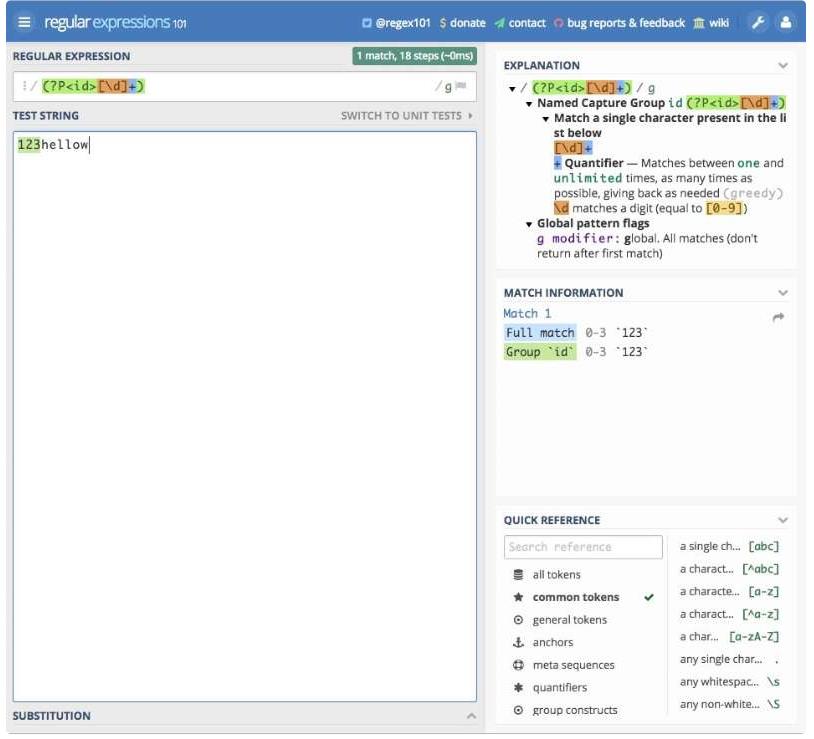
也就是防止攻击者恶意构造ID值,但是我们可以发现$_GET和$_POST值优先于路由正则表达式生成的值:

这边没有找到ID为123hh的项目,所以返回rest_invalid。
现在我们可以忽略路由正则的限制,来传入我们自定义的ID。
接下来在审查各个端点方法中,找到了update_item这个方法,及其权限检查方法update_item_permissions_check:
public function update_item_permissions_check( $request ) {

		$post = get_post( $request[\'id\'] );
		$post_type = get_post_type_object( $this->post_type );

		if ( $post && ! $this->check_update_permission( $post ) ) {
			return new WP_Error( \'rest_cannot_edit\', __( \'Sorry, you are not allowed to edit this post.\' ), array( \'status\' => rest_authorization_required_code() ) );
		}

		if ( ! empty( $request[\'author\'] ) && get_current_user_id() !== $request[\'author\'] && ! current_user_can( $post_type->cap->edit_others_posts ) ) {
			return new WP_Error( \'rest_cannot_edit_others\', __( \'Sorry, you are not allowed to update posts as this user.\' ), array( \'status\' => rest_authorization_required_code() ) );
		}

		if ( ! empty( $request[\'sticky\'] ) && ! current_user_can( $post_type->cap->edit_others_posts ) ) {
			return new WP_Error( \'rest_cannot_assign_sticky\', __( \'Sorry, you are not allowed to make posts sticky.\' ), array( \'status\' => rest_authorization_required_code() ) );
		}

		if ( ! $this->check_assign_terms_permission( $request ) ) {
			return new WP_Error( \'rest_cannot_assign_term\', __( \'Sorry, you are not allowed to assign the provided terms.\' ), array( \'status\' => rest_authorization_required_code() ) );
		}

		return true;
	}
可以看到,此函数通过检查文章是否实际存在,以及我们的用户是否有权限编辑这边文章来验证请求。但是当我们发送一个没有响应文章的ID时,就可以通过权限检查,并允许继续执行对update_item方法的请求。
具体到代码,就是让$post为空,就可以通过权限检查,接下来跟进get_post方法中看一下:
function get_post( $post = null, $output = OBJECT, $filter = \'raw\' ) {
	if ( empty( $post ) && isset( $GLOBALS[\'post\'] ) )
		$post = $GLOBALS[\'post\'];

	if ( $post instanceof WP_Post ) {
		$_post = $post;
	} elseif ( is_object( $post ) ) {
		if ( empty( $post->filter ) ) {
			$_post = sanitize_post( $post, \'raw\' );
			$_post = new WP_Post( $_post );
		} elseif ( \'raw\' == $post->filter ) {
			$_post = new WP_Post( $post );
		} else {
			$_post = WP_Post::get_instance( $post->ID );
		}
	} else {
		$_post = WP_Post::get_instance( $post );
	}

	if ( ! $_post )
		return null;
从代码中可以看出,它是用wp_posts中的get_instance静态方法来获取文章的,跟进wp_posts类,位于/wp-includes/class-wp-post.php中:
public static function get_instance( $post_id ) {
		global $wpdb;

		if ( ! is_numeric( $post_id ) || $post_id != floor( $post_id ) || ! $post_id ) {
			return false;
		}
可以看到,当我们传入的ID不是全由数字字符组成的时候,就会返回false,也就是返回一个不存在的文章。从而get_post方法返回null,从而绕过update_item_permissions_check的权限检测。
回头再看一下可执行方法upload_item:
public function update_item( $request ) {
		$id   = (int) $request[\'id\'];
		$post = get_post( $id );

		if ( empty( $id ) || empty( $post->ID ) || $this->post_type !== $post->post_type ) {
			return new WP_Error( \'rest_post_invalid_id\', __( \'Invalid post ID.\' ), array( \'status\' => 404 ) );
		}

		$post = $this->prepare_item_for_database( $request );

		if ( is_wp_error( $post ) ) {
			return $post;
		}

		// convert the post object to an array, otherwise wp_update_post will expect non-escaped input.
		$post_id = wp_update_post( wp_slash( (array) $post ), true );
在这边将ID参数装换为一个整数,然后传递给get_post。而PHP类型转换的时候回出现这样的情况:

所以,也就是说,当攻击者发起/wp-json/wp/v2/posts/1?id=1hhh请求时,便是发起了对ID为1的文章的请求。下面为利用exploit-db上的POC来进行测试:
- 新建文章:
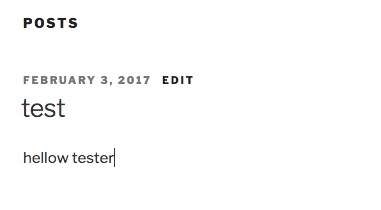
测试:
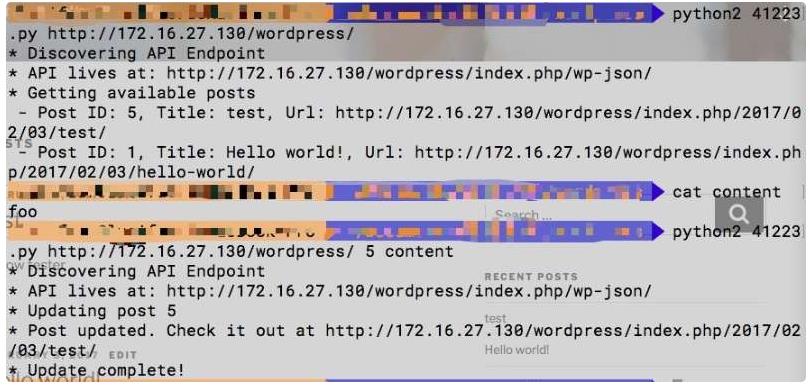
测试结果:

多想了一下
乍一看,感觉这个洞并没有什么太大的影响,但是仔细想了一下,危害还是很大的。先不说WordPress页面执行php代码的各种插件,还有相当一部分的WordPress文章可以调用短代码的方式来输出特定的内容,以及向日志中添加内容,这是一个思路。
另一个思路就是可以进行对原来文章中的指定超链接进行修改,从而进行钓鱼。
还有一个思路,就是利用WordPress文章中解析html以及JavaScript文件包含的做法,辅助其他方法,进行攻击。
0x03 diff比较
对于该漏洞,关键的修改在/wp-includes/class-wp-post.php中:
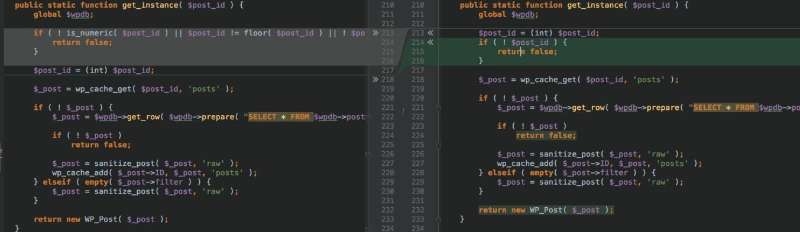
更改了对于$post_id的参数的传入顺序和判断条件,防止了我们传入数字 字母这样的格式进行绕过。
0x04 修补方案
将WordPress更新到最新版本。
猜你喜欢
-
Ripro美化-头像悬浮窗添加一键复制推广链接
2021-04-25 -
WordPress正文添加您最近看过的功能
2021-04-26 -
get_categories()函数
2021-04-26 -
详解网站SEO优化的优点
2021-04-24 -
网站源码后门木马查杀软件 让你轻轻松松去掉后门
2021-04-25 -
WordPress不可忽视的面包屑导航SEO优化技巧
2021-04-25 -
WordPress Win10 Explorer v1.3 主题
2021-04-21 -
is_singular()函数
2021-04-26 -
WordPress的tags标签自定义样式
2021-04-25 -
WordPress在前台添加删除文章功能
2021-04-25
-
WordPress分类/页面/文章类型等模版继承规则和自定义方法
2021-04-26 -
电影资讯采集规则:火车头采集规则全球电影资讯-豆瓣电影-2345影视大全电影电视预告
2021-04-25 -
RIPRO美化主题-专用友情链接+自助申请教程
2021-04-25 -
WordPress 自定义友情链接顺序位置的方法
2021-04-26 -
RIPRO美化点击铃铛按钮弹公告窗
2021-04-25 -
Arcane – 游戏社区网站模板WordPress主题 – v2.7.2
2021-04-24 -
【WP仿小米社区主题】简约大气小米网站网格博客模板
2021-04-22 -
add_meta_box()函数
2021-04-26 -
NDART主题:轻量极简文艺小清新免费WordPress图片主题
2021-04-24 -
关闭WordPress修订版本和自动保存功能图文教程
2021-04-24
猜你在找

常见问题FAQ
- 免费下载或者VIP会员专享资源能否直接商用?
- 本站所有资源版权均属于原作者所有,这里所提供资源均只能用于参考学习用,请勿直接商用。若由于商用引起版权纠纷,一切责任均由使用者承担。更多说明请参考 VIP介绍。
- 提示下载完但解压或打开不了?
- 找不到素材资源介绍文章里的示例图片?
- 大资源

- 2021-04-26Hi,初次和大家见面了,请多关照!
